
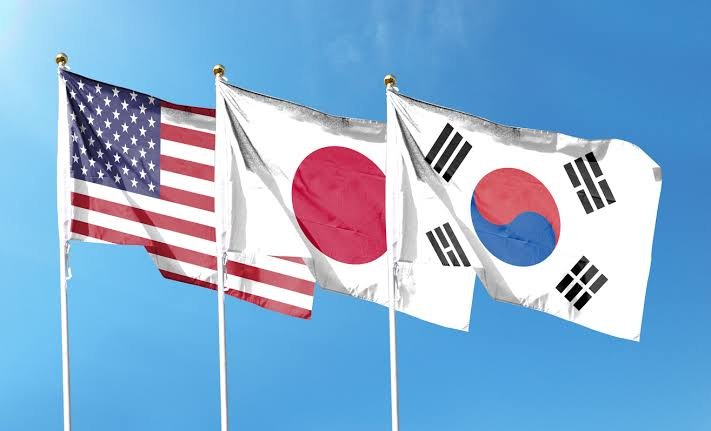

The U.S. Secretary of State Marco Rubio held a trilateral meeting in Ankara during the NATO summit with Japan’s Foreign Minister Toshimitsu Motegi and South Korea’s Foreign Minister Cho Hyun.
In the meeting, the three countries reaffirmed deepened cooperation to ensure security, economic resilience, and stability in the Indo-Pacific region. The ministers emphasized that strong U.S.–Japan–South Korea cooperation will contribute to shared economic prosperity and promote security and stability in an open Indo-Pacific.
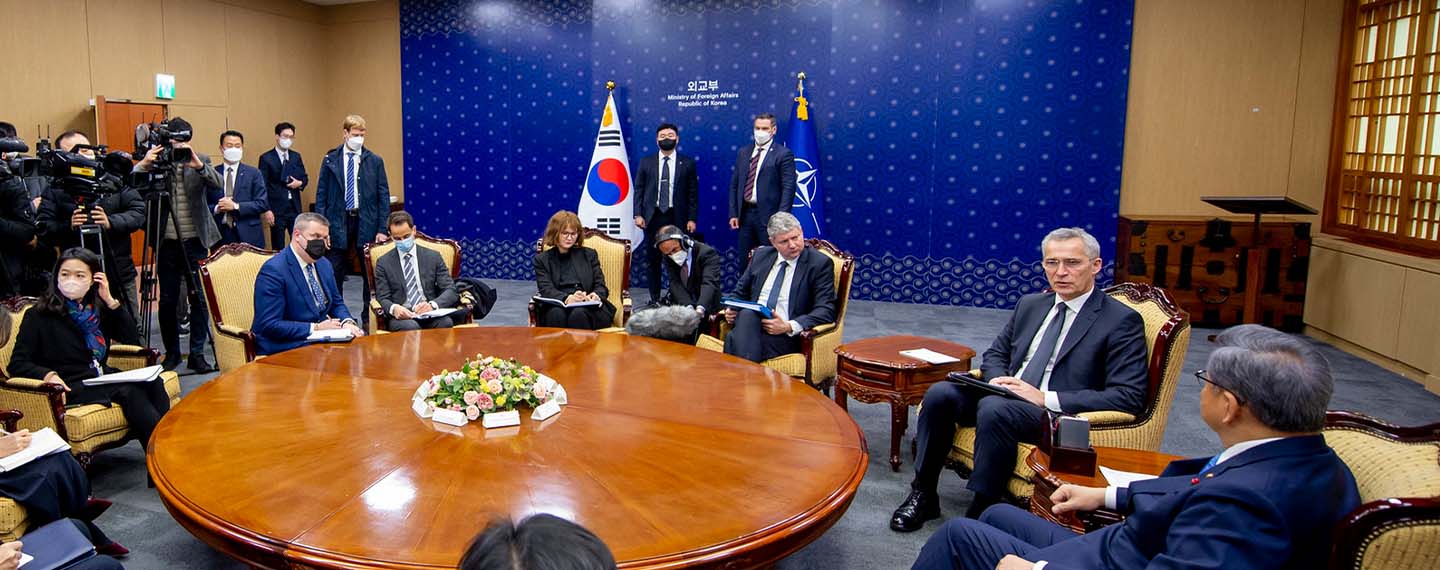
The three leaders underscored the importance of NATO’s cooperation with Indo-Pacific partners. Areas discussed included defense spending and production, energy security, countering cyber and hybrid threats, and sharing information on security challenges in both the Euro-Atlantic and Indo-Pacific regions.
During the meeting, Mr. Rubio, Mr. Motegi, and Mr. Cho signed a trilateral agreement to cooperate on civil nuclear energy. The aim is to accelerate the deployment of small modular reactors in third countries and help diversify energy imports from the United States.
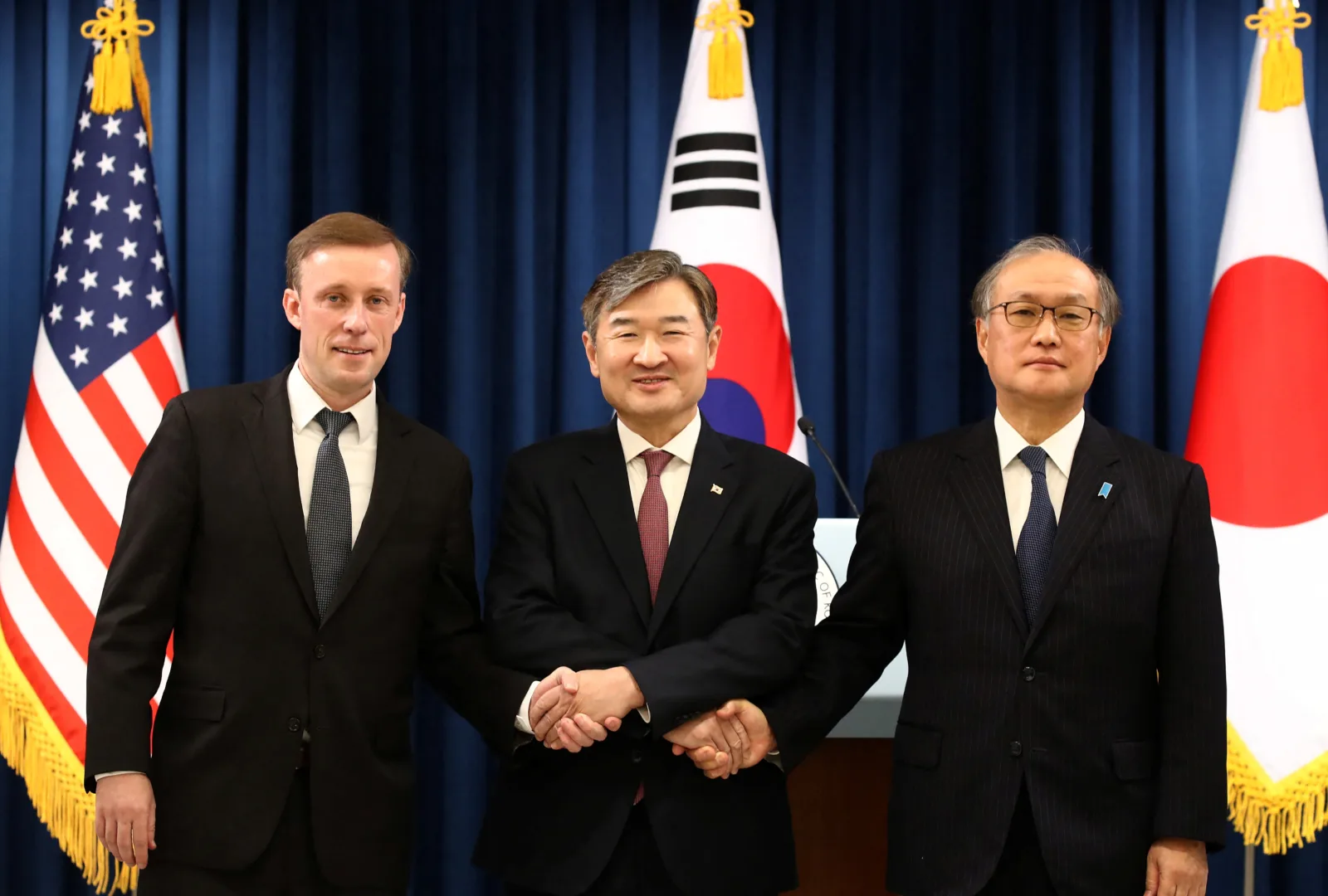
The ministers welcomed progress in trilateral cooperation on regional security, global engagement, economic security, and critical and emerging technologies. They opposed economic coercion and the use of supply chains as political tools, reaffirming their commitment to diversify and bolster critical supply chains. The three countries pledged continued cooperation to preserve freedom of navigation and welcomed new areas for consultation, including international disaster-relief efforts.
The foreign ministers expressed their shared commitment to the complete denuclearization of North Korea and agreed to strengthen cooperation against Pyongyang’s malicious cyber activities and illicit information-technology operations. They also reiterated their commitment to resolving issues related to abducted persons, detainees, prisoners of war, and separated families.
On the Taiwan issue, the three parties stressed the importance of maintaining peace and stability in the Taiwan Strait and expressed concern about actions that continuously create instability around the island. They called for peaceful resolution of cross-strait issues and opposed attempts to unilaterally change the status quo through force or coercion.
The ministers reaffirmed the commitments made in the U.S.–Japan–South Korea joint declaration of 22 September 2025 and the agreements reached during subsequent high-level meetings. They agreed to continue holding trilateral meetings at all levels to further strengthen cooperation.
Also Read:- Iran Says Strait of Hormuz Will Open Only on Its Terms